Winter Baby Clothes Australia: Dressing Your Baby in the Cold
An Australian winter is a moving target. A frosty morning can turn into a mild afternoon, and a heated house feels nothing like the walk to the car. Dressing a baby for it is less about heavy clothes and more about smart layering.
Here is how to keep your baby warm and comfortable through winter, without overheating them, using layers you can add and remove as the day changes.
Layering beats one heavy outfit
The golden rule of winter baby dressing is layers, not bulk. Several light layers trap warmth better than one thick garment, and just as importantly, you can peel a layer off when you move from the cold outside to a warm shop or car. A baby who was cosy on the walk can quickly overheat indoors in a heavy suit that cannot be adjusted, so flexibility is everything.
Building winter layers
A simple layering system works from the skin outwards:
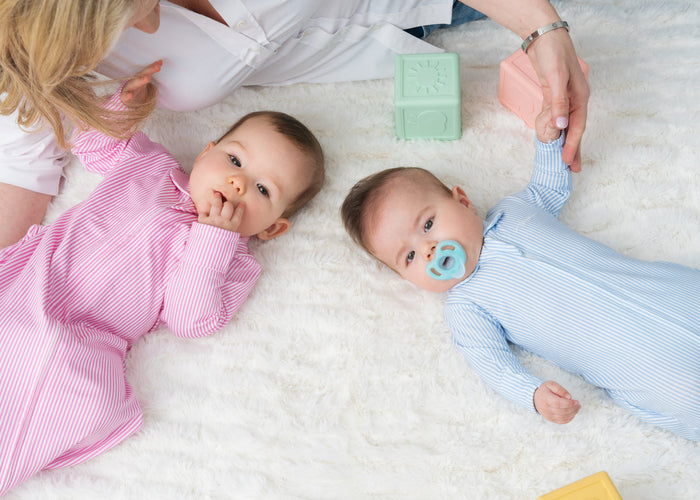
- Base layer: a soft organic cotton bodysuit or long sleeve zip suit against the skin.
- Mid layer: a second light layer such as a cardigan or a second suit when it is cold.
- Outer layer: a jacket, a pramsuit or a wrap for going outside, removed once indoors.
Add or remove the outer layers as you move between environments, and keep the soft base layer constant.
Dressing for winter sleep
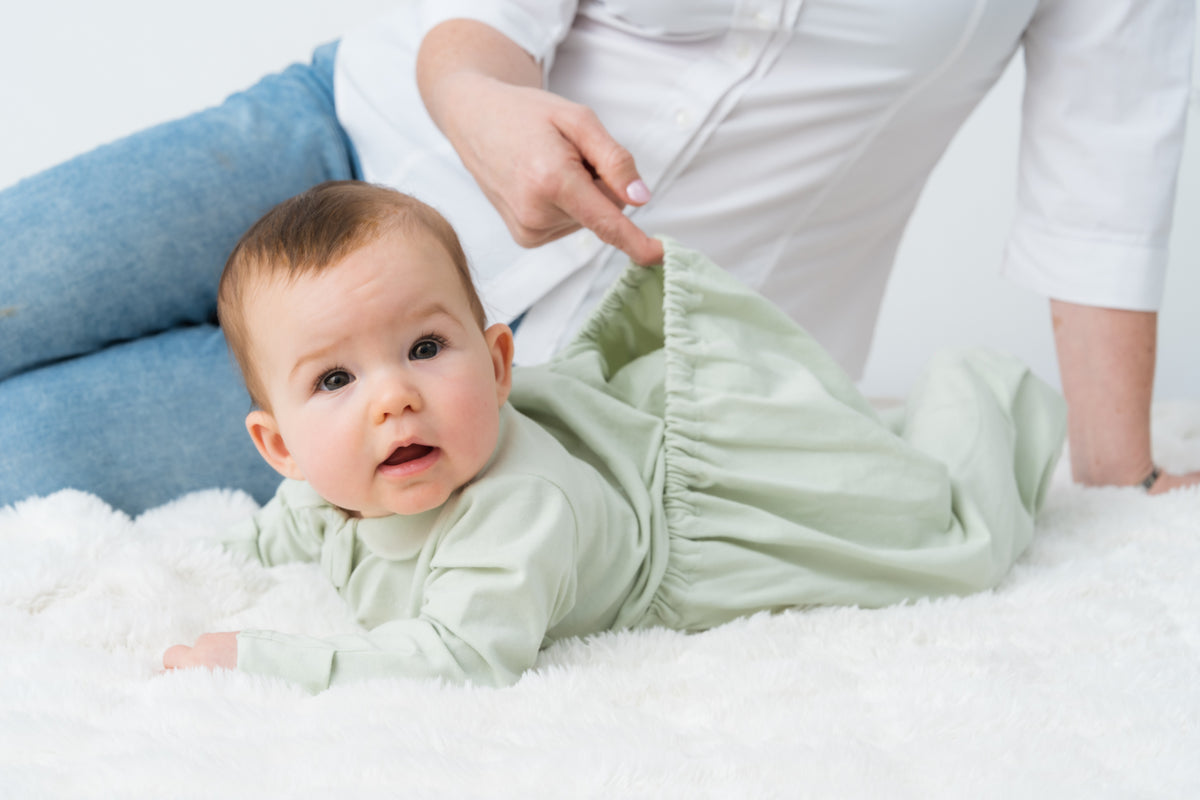
Winter nights need extra thought, because the safe approach is warmth without loose blankets in the cot. Rather than piling on blankets, use a warm base layer like a long sleeve suit with a sleep bag or swaddle rated for cooler temperatures. Judge warmth by feeling the chest or the back of the neck, not the hands, which often feel cool even on a warm baby. Our guides on dressing your baby for sleep and the role of temperature in baby sleep cover this in detail.
Do not forget the extremities
Babies lose heat quickly from their heads, hands and feet. For going outside, a soft hat, and mittens or fold back cuffs that cover the hands, make a real difference. Footed suits or warm socks keep little feet cosy. Indoors, you can usually skip the hat, since babies should not sleep in one, but keep those layers handy for the moment you step out.
Watch for overheating
It is easy to over bundle a baby in winter out of worry, but overheating is uncomfortable and best avoided. Signs your baby is too warm include a hot or sweaty chest and back, flushed cheeks and damp hair. If you notice these, remove a layer. The aim is comfortably warm, not hot, which is exactly why an easy to adjust layering system works so well.
The takeaway
Winter baby clothes in Australia are all about flexible layers rather than heavy outfits. Keep a soft organic base layer constant, add mid and outer layers you can remove as the day changes, dress carefully for sleep with a sleep bag rather than blankets, and watch for overheating. Do that and your baby stays comfortably warm from the frosty morning to the mild afternoon.
Frequently asked questions
How should I dress my baby in winter?
In flexible layers rather than one heavy outfit. Keep a soft organic base layer constant, add a mid layer like a cardigan when cold, and an outer layer for going outside that you remove once indoors.
What should a baby wear to sleep in winter?
A warm base layer such as a long sleeve zip suit with a sleep bag or swaddle rated for cooler temperatures, rather than loose blankets. Judge warmth by the chest or back of the neck, not the hands.
How do I know if my baby is too warm?
Signs of overheating include a hot or sweaty chest and back, flushed cheeks and damp hair. If you notice these, remove a layer. Aim for comfortably warm, not hot.
Should my baby wear a hat indoors in winter?
Generally no, and babies should not sleep in a hat. Keep hats and mittens for going outside, where babies lose heat quickly from the head, hands and feet.