How Many Baby Clothes Does a Newborn Actually Need?
It is one of the most common questions new parents ask, and the answer is almost always fewer than you have been told. Babies grow fast and outgrow sizes in weeks, so buying in bulk usually means buying clothes that never get worn.
Here is a realistic guide to how many baby clothes a newborn needs, based on how often you will wash rather than how much the shops would like you to buy.
The short answer
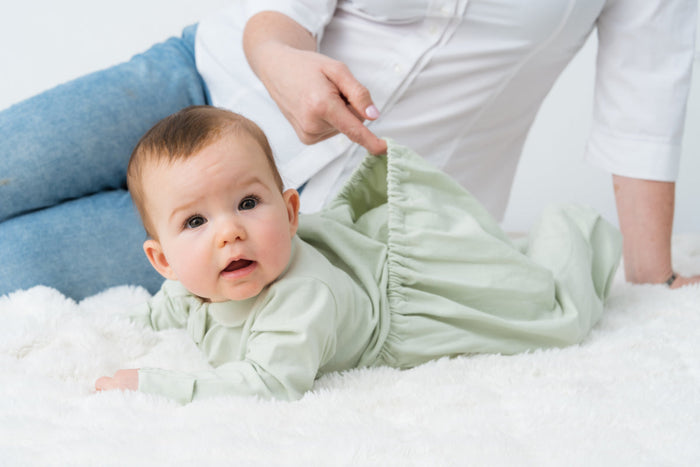
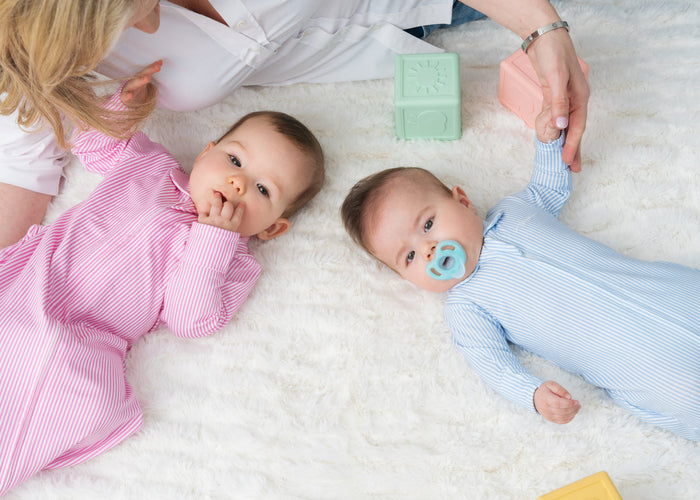
If you wash every two or three days, a newborn needs roughly five to seven of each of the main pieces they wear daily, and fewer of the extras. That covers spills, leaks and changes without leaving you doing laundry every night, and without a drawer of unworn clothes when your baby moves up a size.
| Item | How many |
|---|---|
| Long sleeve zip suits | 5 to 7 |
| Short sleeve rompers | 4 to 6 |
| Bodysuits or singlets | 5 to 7 |
| Swaddles or sleep bags | 2 to 3 |
| Hats | 1 to 2 |
| Socks | 3 pairs |
| Warm layer | 1 to 2 |
Why not just buy more?
Two reasons. First, newborns grow quickly and unpredictably. A size that fits at birth can be snug within a fortnight, so a large stash of newborn clothes is often outgrown before it is worn. Second, tiny babies do not need variety, they need comfort. A small rotation of soft, easy pieces serves them better than a big wardrobe you spend time sorting through.
How washing frequency changes the number
The single biggest factor is how often you do laundry. If you wash every day, you can get by with fewer pieces. If you prefer to wash twice a week, add a couple more of each. A simple way to work it out is to count how many changes your baby has in a typical day, multiply by the number of days between washes, then add two or three spares for accidents. For most newborns that lands right around the five to seven mark for daily items.
Spread across sizes, not stacked in one
How many you buy matters less than which sizes. Rather than seven suits all in newborn size, buy a few in 0000, more in 000, and a couple in 00 ready for growth. That way nothing is outgrown before it is worn. Our Australian sizing guide shows what each size fits so you can plan the spread.
What about gifts?
Expect to receive baby clothes as gifts, often in newborn size and often more than you planned for. Because of this, it is wise to buy light yourself before the birth and fill any gaps afterwards once you see what you have and how big your baby actually is. If friends ask what to give, useful sizes are 00 and 0, which tend to be under bought and are worn a little later when the newborn gifts have been outgrown.
The takeaway
A newborn needs a small, well chosen wardrobe, not a large one. Five to seven of the daily pieces, spread across two or three sizes, in soft fabric that washes well, is all it takes to be genuinely prepared. Buy fewer, buy better, and let the pieces earn their keep. For the full breakdown with a printable list, see our newborn baby clothes checklist.
Frequently asked questions
How many baby clothes does a newborn need?
If you wash every two or three days, about five to seven of each daily piece, such as zip suits, rompers and bodysuits, plus a few swaddles, a hat, socks and a warm layer. Fewer if you wash daily.
How many onesies does a newborn need?
Around five to seven bodysuits or onesies covers changes and washing without overbuying. They are worn as a base layer, so a small rotation is plenty.
Should I buy lots of newborn size clothes?
No. Babies often outgrow newborn size within a couple of weeks, and some are born too big for it. Buy a few in 0000 and more in 000 and 00 so nothing goes unworn.
What sizes should I ask for as gifts?
Sizes 00 and 0 are useful, since they are often under bought and worn a little later once newborn gifts have been outgrown.