What to Look for in Organic Baby Clothes: 6 Things That Matter
Not all organic baby clothes are made the same. Two pieces can both say organic on the tag and feel completely different once your baby is wearing them at 3am.
If you are building a small wardrobe of pieces that will last, here are the six things worth checking before you buy. They are the same things we look at when we design for Dream with Baker.
1. A real certification, not just the word
The label organic is not tightly regulated on clothing, so a genuine certification is your best proof. GOTS, the Global Organic Textile Standard, is the one to look for because it checks the fibre and the whole way the garment is made, including the dyes. If a brand is certified, it will usually say so clearly. If it only says organic with no standard behind it, ask why.
2. The fabric weight and knit
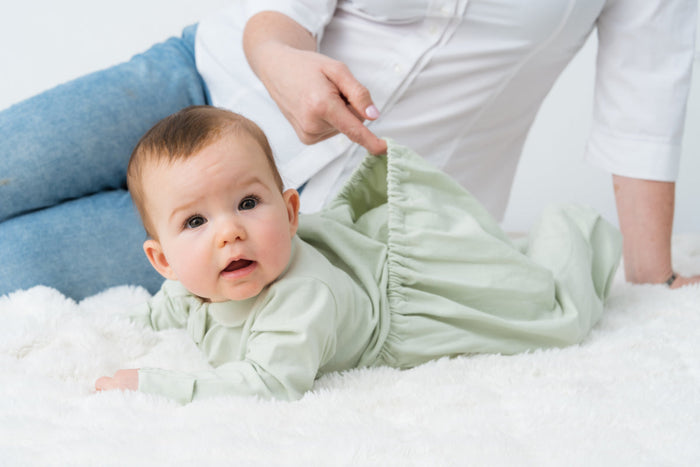
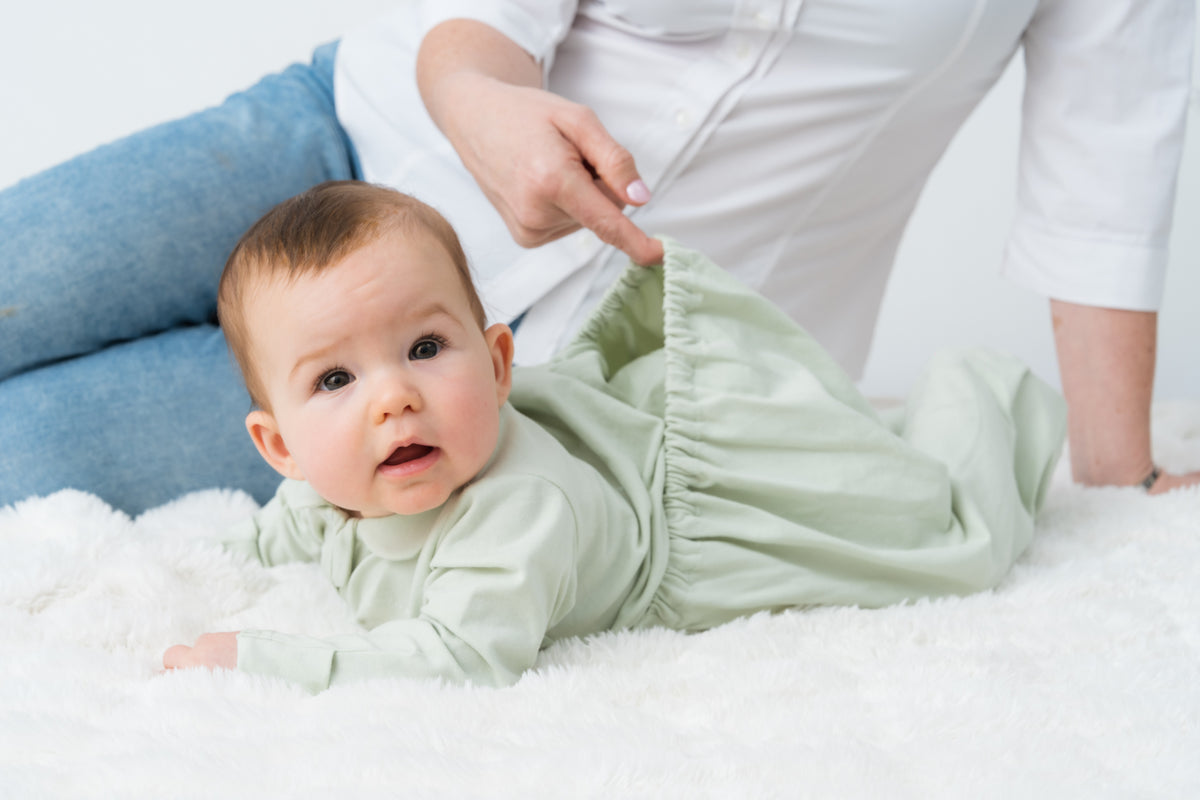
Organic cotton comes in many weights. For babies in Australia, a breathable jersey knit is the sweet spot. It moves with your baby, lets heat escape so they do not overheat, and feels soft rather than stiff. Heavier woven cotton can look lovely but is often less comfortable for daily wear and sleep.
3. How the clothes open and close
This is the detail most people forget and then wish they had not. Press studs look neat but are slow and fiddly in the dark. A full length zip lets you dress and change your baby with one hand, half asleep, without a fight. When you are doing this several times a night, the fastening matters as much as the fabric.
4. Flat seams and soft finishes
Turn a garment inside out. Rough seams, stiff labels and scratchy stitching are exactly what irritates a baby who cannot tell you what is wrong. Look for flat seams, tag free or printed labels, and fold back cuffs that double as mittens for tiny hands. Small touches like these are the difference between a suit your baby settles in and one they fight.
5. Sizing that gives you room to grow
Babies grow in bursts, and organic cotton can shrink a little on its first wash. Choose a brand with clear Australian sizing and, if you are between sizes, size up. A slightly roomy suit lasts weeks longer than one bought to fit perfectly on day one. Our range runs from newborn through to 18 to 24 months so you are not restarting every few weeks.
6. Whether it survives real washing
Baby clothes get washed constantly. A good organic piece should still feel soft, hold its shape and keep its colour after twenty or thirty washes. Cheaper fabric goes thin, pills and fades fast, which means you buy again sooner. Durable organic cotton is often the cheaper choice over a whole year, not the dearer one.
The brand and where it is made
A certification tells you about the fabric, but the brand tells you about everything the certification does not cover, like design, fit and how the pieces are finished. Look for a maker that is open about where and how their clothes are produced. Ethical, well run manufacturing usually shows up in the details, in even stitching, secure zips and pieces that keep their shape. If a brand hides where its clothes come from, that is worth noting.
Common mistakes when buying organic baby clothes
A few traps catch parents out, and they are easy to avoid once you know them:
- Buying on the word alone. Organic printed on a tag with no certification behind it means very little. Check for the standard.
- Buying too small. A perfect newborn fit can be outgrown in a fortnight. Size up if you are unsure.
- Over buying one size. Ten suits in newborn size and none in the next size up leaves you shopping again in weeks. Spread your sizes.
- Ignoring the fastenings. The prettiest suit becomes the least used one if it is a struggle to get on and off at 3am.
A quick checklist before you buy
- Is it GOTS certified, or just labelled organic?
- Is the fabric a soft, breathable jersey knit?
- Does it open with a zip for easy dressing and changes?
- Are the seams flat and the labels non scratchy?
- Is the sizing clear, with room to grow?
- Will it hold up to frequent washing?
Tick most of those and you have a piece worth keeping. For a fuller picture of the market, our complete guide to organic baby clothes in Australia walks through everything in one place.
Frequently asked questions
What is the most important thing to look for in organic baby clothes?
A genuine GOTS certification. It is the clearest proof that both the cotton and the way the garment is made meet organic standards, including the dyes and finishes that sit against your baby's skin.
Does organic cotton shrink?
It can shrink slightly on the first wash, which is normal for natural fibres. Buying one size up if you are between sizes gives you room and makes each piece last longer.
Are zips or press studs better for baby clothes?
A full length zip is faster and easier, especially for night changes when you want one handed dressing without fully waking your baby. Press studs are slower and easy to misalign in the dark.
How many organic pieces does a newborn need?
Fewer than you think. A small rotation of quality base layers works better than a large wardrobe, since babies grow quickly and organic pieces hold up well enough to reuse and hand down.